Do you like spring ephemerals? In the spring, I love to be on the lookout for these first little flowers that push through the forest floor through the brown leaves of winter - a tiny splash of color on a brown and sleepy canvas. Yesterday, it was a tiny splash of white tinged with pink on a slender, delicate stem that caught my eye. I almost missed it. I'd been looking for the larger bloodroot.
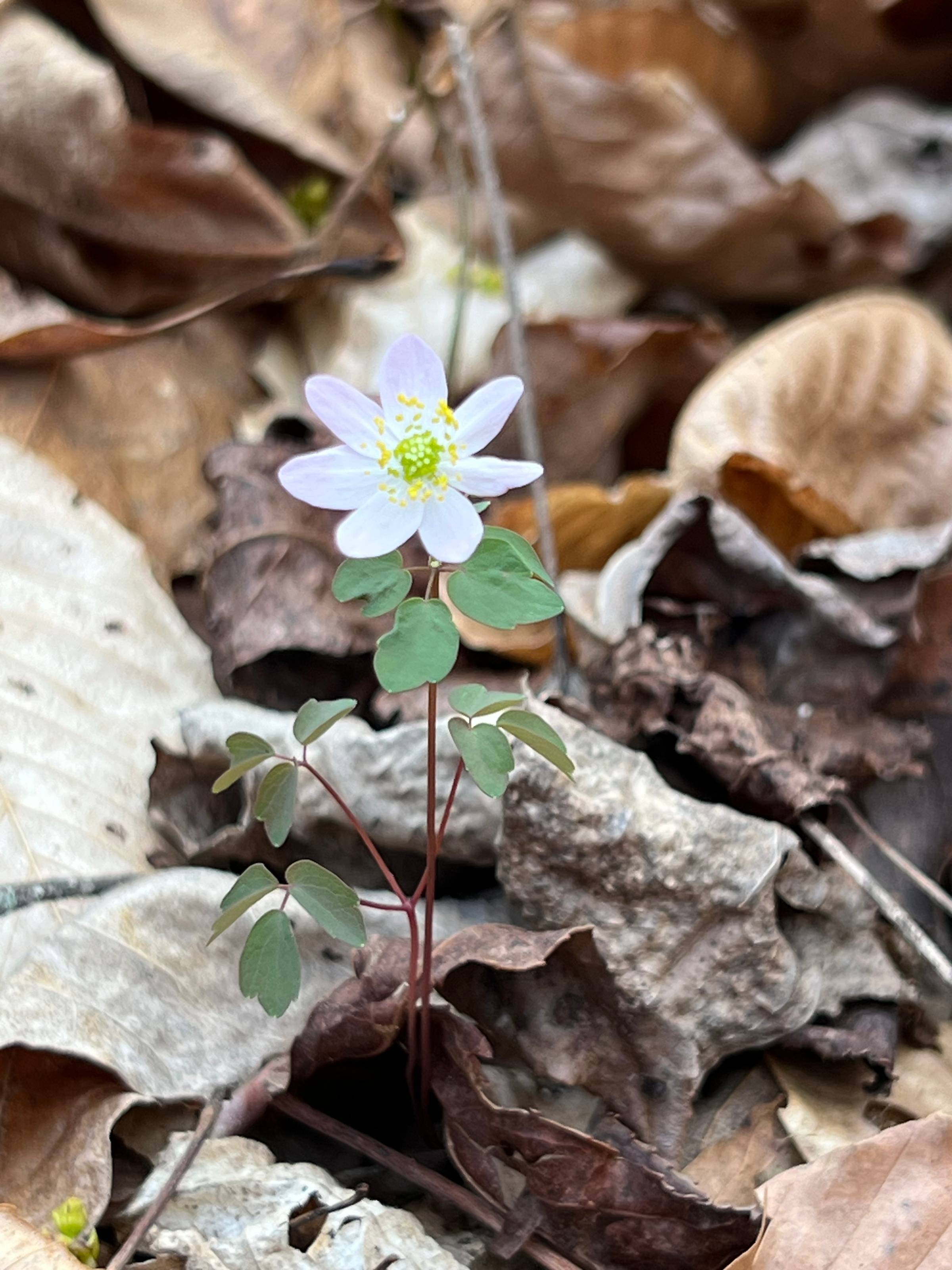
It made me think about how often we overlook the quiet signs of growth because we are watching for something else. In language learning, we sometimes look for one clear marker: speaking. If a child is not yet speaking much French, it can feel as though nothing is happening. Yet, under the surface, language is taking root - sounds are becoming familiar, words are settling into memory, connections are forming. Like the small flowers beneath the forest leaves, much of the growth is happening out of sight.
At times, I see the same thing happening in my own children's history and science narrations. I catch myself putting my own expectations into what I think they should tell me. I'm looking for my "bloodroot" but they are showing me the "anemone" or they tell me something so unrelated to what I expected that they might actually still be "underground." If I am patient, though, the pieces that didn't come out in that first narration often surface later in other conversations, overheard amongst siblings, or in a narration days afterward.
So we can be encouraged. Even when we can't see the learning, it's very likely there, hiding like the ephemerals. Thankfully, unlike these flowers that bloom only for a short time, our learning can live with us for a lifetime if we nurture it, even in the smallest ways, each day.
Have you noticed any hidden growth in your children or yourself lately?